This page is a stub.
You can help improve it.
The Douglases Abroad
From their stronghold at Cavers
in Roxburghshire, the Douglas family extended its influence far beyond
the Borders. Through the cadet branch of
Friarshaw, descendants carried the Douglas name into continental Europe, establishing distinguished lines in Sweden, Germany, and Holland. These migrations were often driven by military service, mercantile opportunity, and strategic marriages, reflecting the adaptability of Scottish gentry in the seventeenth and eighteenth centuries.
The Friarshaw Douglases produced soldiers of renown, diplomats, and landowners who wove their heritage into the fabric of European society, ensuring that the Douglas legacy was not confined to Scotland but became part of a wider international story.
Notes:
• Netherlands: General Robert Douglas married
Helena de Brauw in
1754 from whom are descended the
van Breugel Douglas family.
• The Douglas family in Aschersleben:
A member of the Douglas clan emigrated from Scotland for religious reasons in 1772
and came to Aschersleben, which was part of the Brandenburg Brandenburg as part of
the Halberstadt monastery. The first two generations were initially Calvinist preachers in
the Reformed congregations. They also did farming because the money was barely
enough.
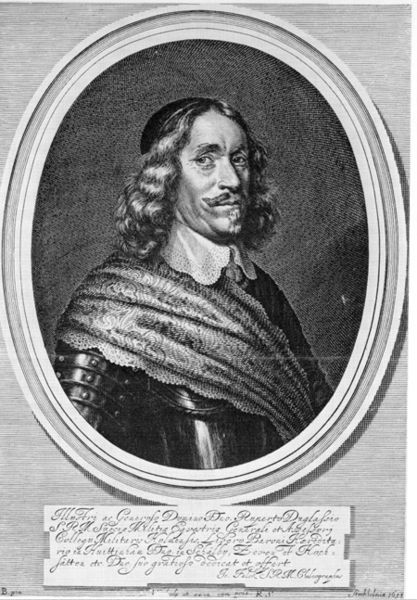
• The Swedish branch of the Douglas family is descended
from the Scottish-born Field
Marshal Robert Douglas, Count of Skenninge, who entered Swedish
service in 1627. He received the Swedish title of Baron in 1651 and the
title of Count (the highest title awarded to non-royalty in Sweden) in
1654. His descendants, the Swedish Douglas family, is one of Sweden's
most prominent noble families since the mid 17th century.
• Estonia: Members of the Swedish branch also became members of the Estonian knighthood, and were introduced at the House of Knights in Reval in 1784.
(Possibly a James Douglas of Friarshaw—a descendant of the Douglas of Cavers line through the Friarshaw branch,
but see Robert Wilhelm
Douglas.) This branch became extinct in 1826.
•
Germany: In 1848, the Swedish nobleman Count Carl Israel Wilhelm Douglas (1824–1898),
himself a descendant of the Douglas of Friarshaw family, entered into a dynastic marriage with Louise, Countess of Langenstein and Gondelsheim, the illegitimate daughter of Grand Duke Ludwig I of Baden. This union brought the Douglas family into the orbit of Baden’s aristocracy and, in 1872, placed Carl in possession of Langenstein Castle, near Lake Constance in the municipality of Orsingen-Nenzingen.
The children of Carl and Louise went on to hold significant political offices in both Sweden and Germany, strengthening the family’s influence across borders. Their grandson, Karl Robert Douglas, cemented this legacy when, in 1906, he made Langenstein Castle his principal residence. From this decision emerged the enduring line of the Counts Douglas-Langenstein of Baden, a branch that continues to this day.
The family retained Castle Gondelsheim until 2010, and their estates extended widely across Hegau, the Upper Danube Valley, and Gondelsheim, reflecting both their wealth and their lasting presence in the region.
Contributions
Do you have an ancestor whose
story should be told here? Can you add to this article? Please let us have the details.
|