Alla Corte dei Conti Scotti
Stay within the story of a castle
Based on an information board
within the castle:
In the heart of Emilia-Romagna, the Castello
di Vigoleno stands as a testament to noble endurance. Gifted by the
Visconti to the Scotti family in the late 14th century, the castle
remained under their stewardship for over five centuries. Its towers,
battlements, and intimate theatre—commissioned in the 1920s by Princess
Maria Ruspoli de Gramont—still echo with the grace of its former lords.
The name Alla Corte dei Conti Scotti translates as “At the Court of
the Counts Scotti,” evoking both the aristocratic lineage of the Scotti
family and the tradition of hospitality extended within their domain. In
medieval and Renaissance Italy, a *corte* was not merely a court in the
judicial sense - it was the seat of noble governance, a place of
gathering, decision-making, and welcome. To stay alla corte was to be
received with honour.
Scottish visitors will find a familiar
spirit here: much like Scotland’s own tower houses and baronial
retreats, Vigoleno offers not just shelter but atmosphere. Vaulted
ceilings, worn stone thresholds, and views across the Stirone Valley
create a setting where history is not displayed - it is lived. Each
suite is a quiet homage to the castle’s past, where comfort is shaped by
centuries and elegance is never overstated.
Whether drawn by
architecture, ancestry, or the quiet romance of staying somewhere
storied, guests are welcomed not as tourists, but as temporary
custodians of a place that has endured. Alla Corte dei Conti Scotti is
not merely a place to stay - it is a place to belong, if only for a
while.
The Castle
The Castle is located in the centre of the medieval town of
Vigoleno, on the spur of a hill at about 500 metres above sea level in
the municipality of Vernasca on the border between the provinces of
Piacenza and Parma.
The area is of great naturalistic interest
for the discovery of marine sediments and fossils dating to the tertiary
and quaternary era, and for the Vigoleno grotte discovered during the
second half of the 800’s a few metres north of the town.
The area
is also famous for excellent wines especially Vin Santo of Vigoleno.
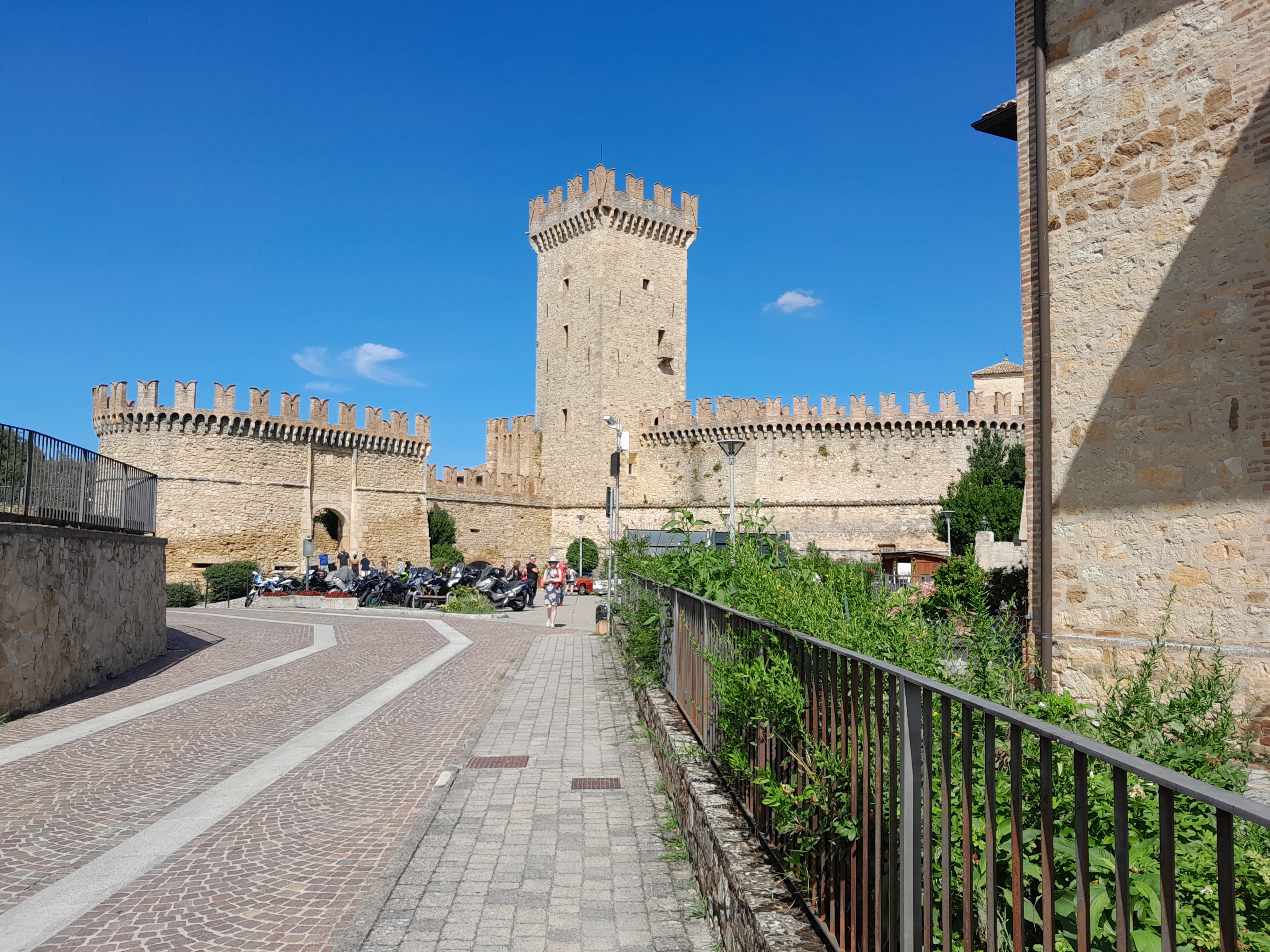
The Castle is protected by two surrounding walls, one medieval and
the other renaissance. Three different portcullis, embrasures,
Ghibelline battlements and traces of a draw-bridge preceed the entrance
to the village and the castle.
The third portcullis leads to the
fountain piazza which represented political power and where Casa Tanzi
is located. Formerly a tower for garrisons with prisons and cellars, it
became a residence in the XIX-XX Centuries.
The history of the
village is indissolubly tied to that of the Castle. Its origins go back
to an ancient Roman settlement, later the Longobards fought off the
Hungarians. In 1141 the Castle became property of the city of Piacenza
to then belong to the Scotti Family in the XIII Century up to the
beginning of the 1900’s.
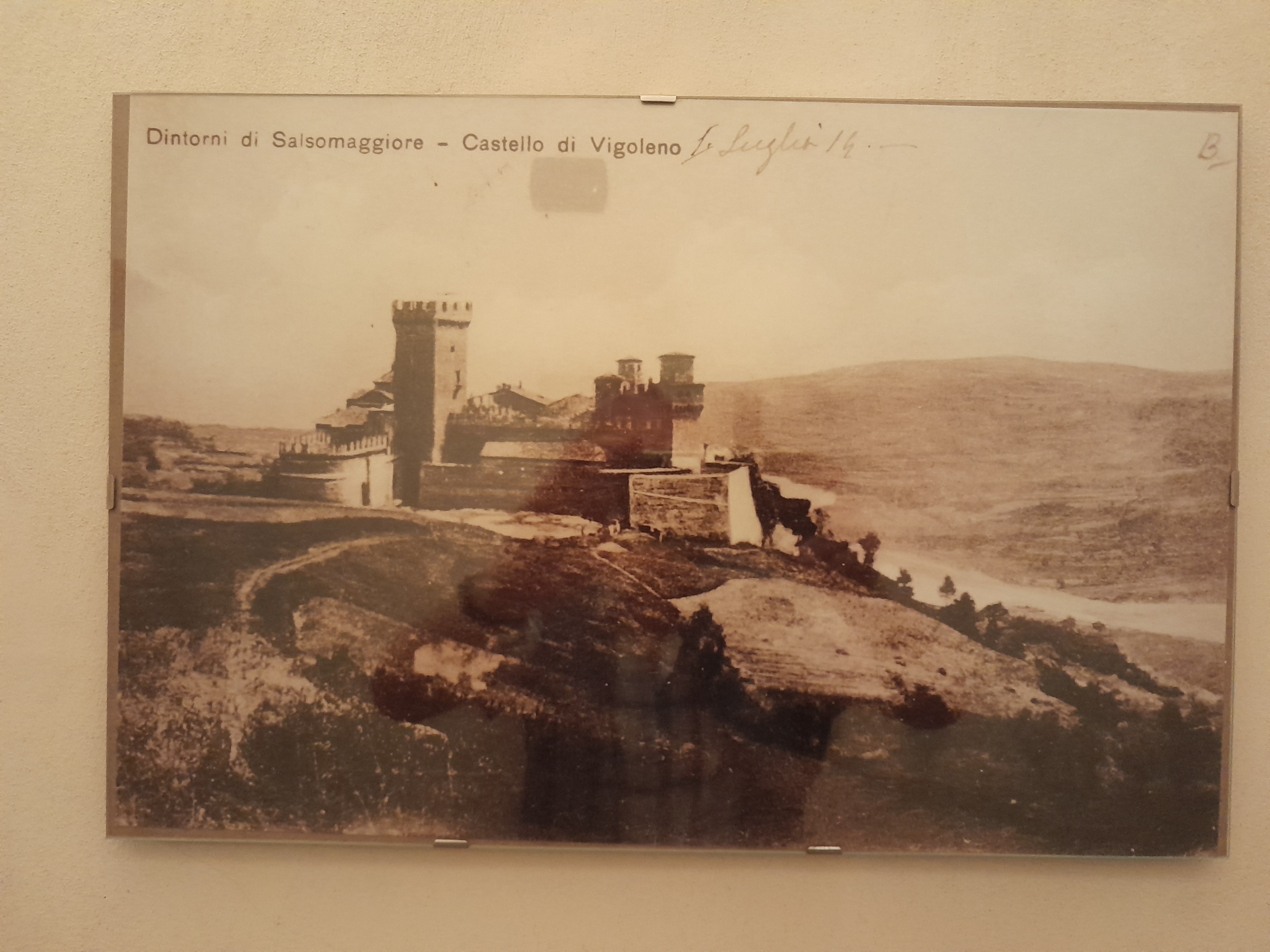
The Castle is rectangular in shape, the
tower has a mullioned window and three caryatids, and the rooms were
refurbished during the XVII-XVIII Centuries when fireplaces, coffer
ceilings and frescos were added. The tower was a refined literary and
cultural center during the second half of the 1600’s and today is in a
perfect state thanks to the artistic and historic renovations.
Worthy of mention the scenographic theatre created thanks to Duchesse
Ruspoli Gramont with frescos of the Russian painter Jacovleff.
Gabriele D’Annunzio, Mary Pickford, Elsa Maxwell, and Arthur Rubinstein
crossed the walls of the Castle in the 1920’s.
Parts of the Film
Ladyhawke directed by Richard Donner and staring Rutger Hauer and
Michelle Pfeiffer were shot at the Vigoleno Castle.
The religious
monuments of interest are the Oratorio della Beata Vergine delle Grazie
and the Pieve of San Giorgio.
The Oratorio was built during the
XVI Century. The XVIII Century side alters are dedicated to the Madonna
del Rosario and Saint Francis. A 1515 fresco of the Beata Vergine delle
Grazie feeding Baby Jesus decorates the main alter.
The Pieve of
San Giorgio is a Romanic construction which dates to the XII Century. A
fresco of Saint George killing a dragon and one of the Incarnation of
The Virgin are located in the main apse.
Notes:
1.
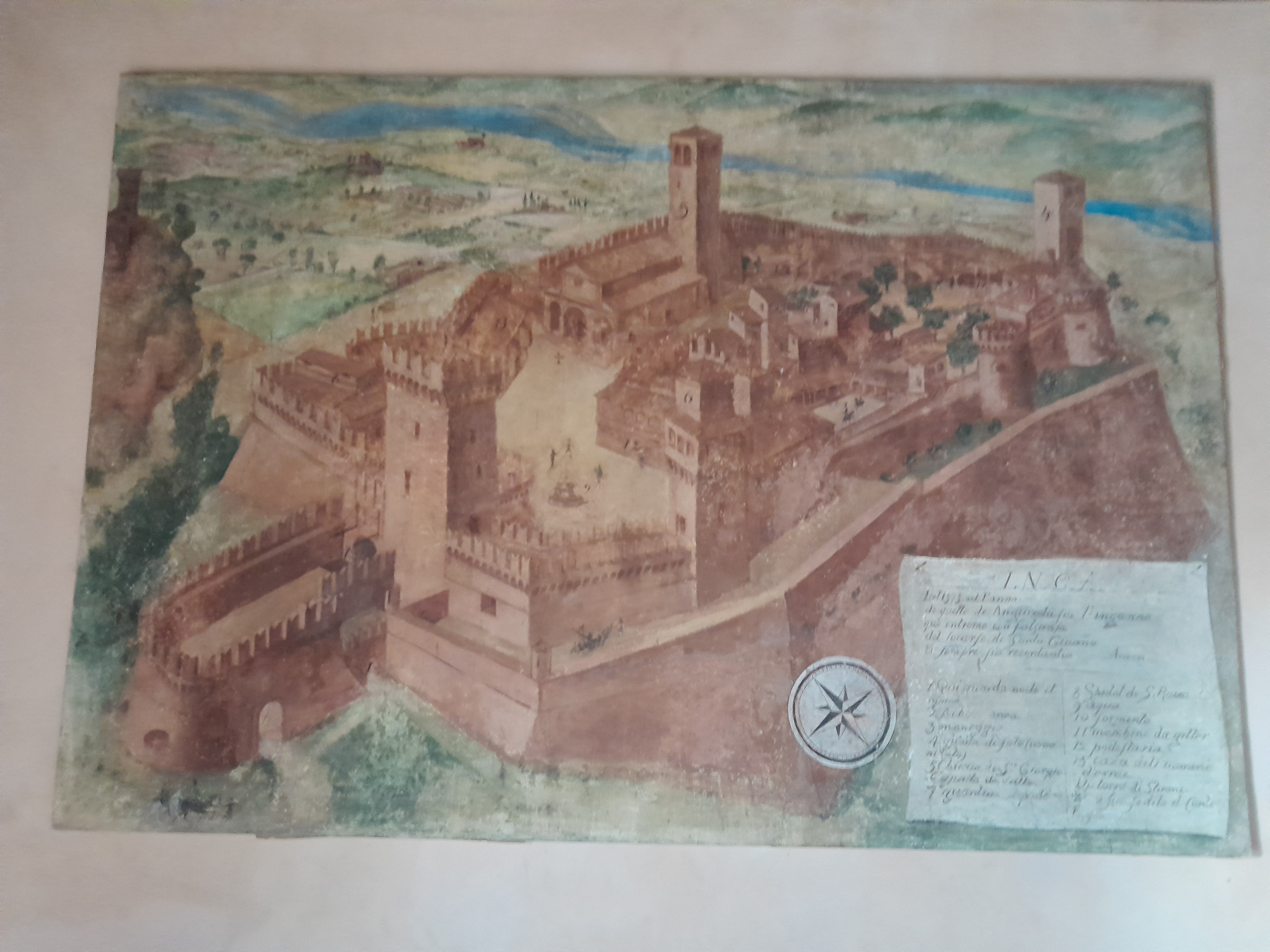
The image of Vigoleno makes reference in the information box to January
1373 when the castle was captured by Papal troops. However, it was
quickly lost through a deception. Ghibelline forces, led by Giovanni
Anguissola, tricked the Papal messengers into allowing them entry under
the false pretense of being reinforcements. The Ghibellines then seized
the fortress and later destroyed the building almost completely.
Visconti Control: At this time, the castle was generally associated with
the Visconti family, the Dukes of Milan, who had gained and lost control
of it during their wars with forces like the Papal States and Amedeo VI
of Savoy.
While the castle was essentially a ruin for some time
after 1373, the next major event was in 1389. Odoardo Visconti, the Duke
of Milan, ceded the rights over Vigoleno to the Scotti family
(specifically Francesco Scotti) and granted them the license to rebuild
the fort. The castle as it stands today is largely the result of this
late 14th and 15th-century reconstruction by the Scotti.
See also:
•
The Douglas Scotti
family of Vigoleno
•
Castell Vigoleno photo
gallery
• For more on the Douglas Scotti families of Italy, see our
Italy portal.
Contributions
Do you have an ancestor whose
story should be told here? Can you add to this article? Please let us have the details.
|