This page is a stub.
You can help improve it.
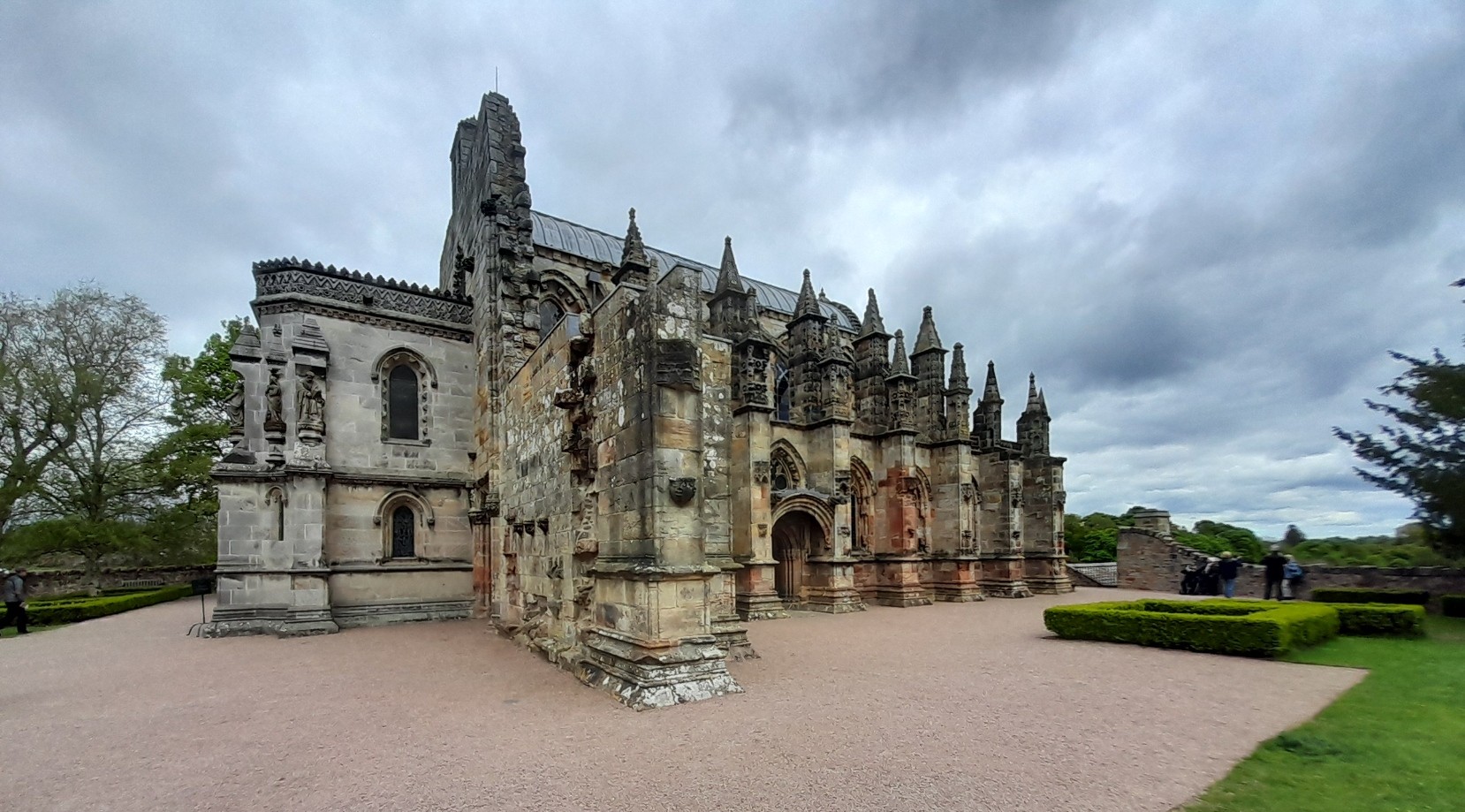
Rosslyn Chapel, a masterpiece of medieval Scottish craftsmanship, holds
deep connections to the noble families that shaped Scotland's
history—including the Sinclairs and Douglases. One such historic union
was the marriage of Henry Sinclair, 2nd Earl of Orkney, and Egidia
Douglas in 1404. She was the daughter of Sir William Douglas of Nithsdale and his wife Egidia Stewart, daughter of
King Robert II of Scotland and second wife Euphemia de Ross. This marriage was more than just a personal alliance;
it merged two powerful dynasties, strengthening ties between the
Sinclairs, known for their Orkney holdings and rumoured links to ancient
mysteries, and the Douglases, a military powerhouse in medieval
Scotland.
Egidia Douglas and Henry Sinclair, the 2nd Earl of
Orkney, were married on 17 November 1407. Their union was marked by a
significant grant from Archibald, the fourth Earl of Douglas, who
bestowed the barony of Herbertshire upon Earl Henry and his Countess,
Lady Egidia, and their heirs. This grant was later confirmed by Regent
Albany on 20 November 1407.
Egidia Douglas, also known as The
Fair Maid of Nithsdale, was the daughter of
William Douglas, Lord of
Nithsdale, and Egidia Stewart. She and Henry Sinclair had at least one
son, William Sinclair, who later became the 3rd Earl of Orkney.
Henry Sinclair, born around 1373, was the son of Henry Sinclair, 1st
Earl of Orkney, and Jean Haliburton. He passed away in 1420, while Egidia lived
until 1438. Their marriage was an important alliance between two
noble Scottish families, strengthening ties between the Douglas and
Sinclair houses.
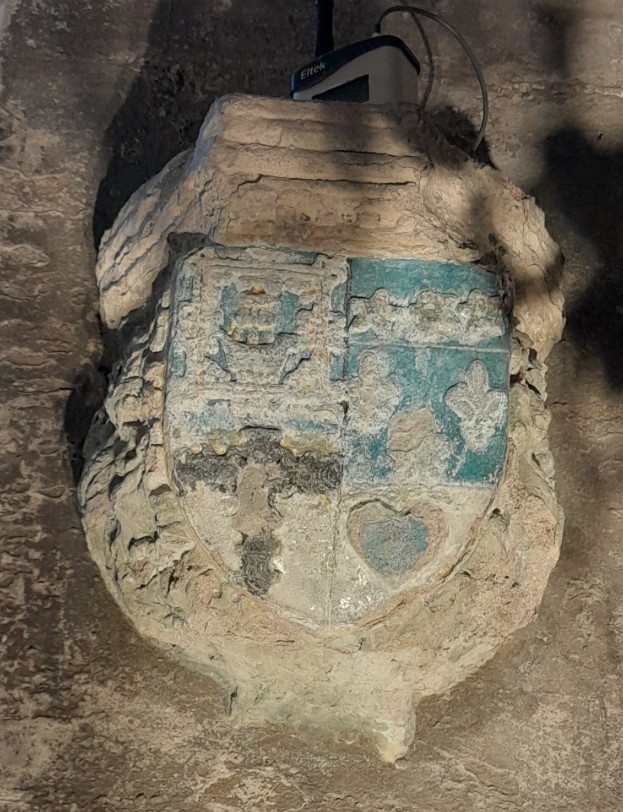
The Sinclair family had strong ties to Robert
the Bruce, particularly during the Wars of Scottish Independence. The
Sinclairs were staunch supporters of Bruce's claim to the Scottish
throne and played a significant role in his military campaigns. This is
recognised by the carving of Bruce's heart, in Rosslyn Chapel.
One of the most notable connections was Sir Henry Sinclair, who fought
alongside Bruce at the Battle of Bannockburn in 1314. This decisive
victory secured Scotland’s independence and cemented Bruce’s reign as
King of Scots. The Sinclair family’s loyalty was rewarded with land
grants and noble titles.
Additionally, the Sinclairs were
involved in the Knights Templar, and some legends suggest that Sir Henry
Sinclair accompanied Sir James Douglas in an attempt to carry Robert the
Bruce’s heart to the Holy Land after his death. The heart was ultimately
returned to Scotland and buried at Melrose Abbey.
Built later in 1446 by Sir William St Clair, a
descendant of Henry and Egidia, Rosslyn Chapel stands as an enduring
testament to the Sinclair family's wealth and influence. The chapel is
famous for its intricate carvings, some of which depict heraldic symbols
connected to Scotland’s noble families. It’s possible that the
Douglas-Sinclair armorial was a tribute to this marriage.
Contributions
Do you have an ancestor whose
story should be told here? Please let us have the details.
Source
Sources for this article include:
Miscellaneous |