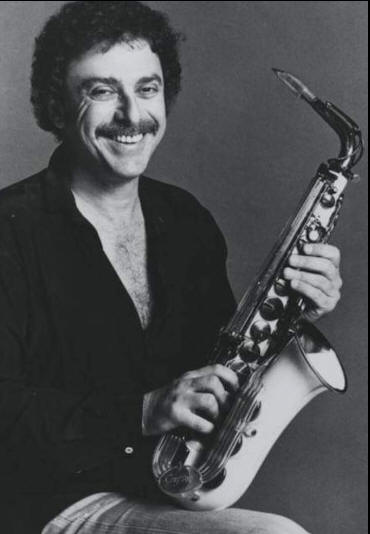
Steven Douglas Kreisman — better known as Steve Douglas — was a celebrated saxophonist and prolific session musician, best remembered as a core member of The Wrecking Crew, the legendary group of Los Angeles studio players behind countless pop and rock hits of the 1960s and ’70s.
Born in Los Angeles, California, Douglas grew up in a musical household — his mother sang with Stan Kenton — and was raised in Fresno before returning to L.A. at age 13. As a youth, he played trombone, trumpet, and violin, but a life-changing encounter with Chuck Higgins’ “Pachuko Hop” inspired him to devote himself to the saxophone. Within months, he was performing at sessions and concerts at El Monte Legion Stadium, hosted by DJ Hunter Hancock.
After graduating from Fairfax High School in 1958, Douglas joined Duane Eddy’s studio and touring band, contributing saxophone to hits like “Peter Gunn,” “Forty Miles of Bad Road,” and “Cannonball.” When his time with Eddy ended, Douglas quickly became a sought-after session player, lending his sound to a wave of pop, R&B, and rock recordings.
Around this time, he met Phil Spector, and the two briefly formed a band before Spector relocated to New York in 1961. When Spector
launched Philles Records and returned to Los Angeles in 1962, he assembled a team of elite session musicians — later dubbed The Wrecking Crew — with Douglas among its founding members. This ensemble, which included Carol Kaye, Ray Pohlman, Hal Blaine, Earl Palmer, Don Randi, Leon Russell, Barney Kessel, Tommy Tedesco, Glen Campbell, and others, was instrumental in shaping Spector’s iconic Wall of Sound.
Douglas’s saxophone can be heard on a staggering number of hits, including:
- “Da Doo Ron Ron”
- “He’s a Rebel”
- “Shut Down”
- “The Little Old Lady (from Pasadena)”
- “Surfin’ U.S.A.”
- “Return to Sender”
- “Good
Vibrations”
- “River Deep – Mountain High”
- “Christmas
(Baby Please Come Home)”
- “Harlem Shuffle”
…and hundreds more.
He recorded with a who’s who of 20th-century music: The Ronettes, The Beach Boys, Brian Wilson, Frank Sinatra, B.B. King, Ricky Nelson, J.J. Cale, The Crystals, The Righteous Brothers, Ike & Tina Turner, Elvis Presley, Bob Dylan, Aretha Franklin, Darlene Love, Ry Cooder, and many others.
Beyond the studio, Douglas served as an A&R executive at Capitol Records from 1964 to 1967, where he signed and guided artists like Billy Preston, Bobby Darin, and Glen Campbell. He later joined Mercury Records, signing acts such as The Asylum Choir, Blue Cheer, and Leon Russell, and eventually launched his own label, Pentagram Records.
In 1978, Douglas toured the world with Bob Dylan and played on the albums “Street-Legal” and “Bob Dylan at Budokan.” He also released solo projects, including “Hot Sax” (1982) and “The Music of Cheops” (1988).
Tragically, Douglas died of a heart attack during a recording session with Ry Cooder on April 19, 1993. His influence resonated with generations of saxophonists, including Denis Payton (The Dave Clark Five), Ian McDonald (King Crimson/Foreigner), Clarence Clemons (The E Street Band), and Kirk Pengilly (INXS).
In 2003, Steve Douglas was posthumously inducted into the Rock and Roll Hall of Fame in the Sideman category — a fitting tribute to a musician whose sound helped define an era.
Steve had a relationship with the rockabilly singer Jeanni Mack with
whom he had a son. Jeanni, real name Glenda Jean MacDaniel, was noted for her hits Dirty Dishes, Jimmy
and others. She lives in Arkansas, USA.
Any contributions to this item will be
gratefully accepted
Errors and Omissions
|
|
The Forum
|
|
What's new?
|
|
We are looking for your help to improve the accuracy of The Douglas
Archives.
If you spot errors, or omissions, then
please do let us know
Contributions
Many articles are stubs which would benefit from re-writing.
Can you help?
Copyright
You are not authorized to add this page or any images from this page
to Ancestry.com (or its subsidiaries) or other fee-paying sites
without our express permission and then, if given, only by including
our copyright and a URL link to the web site.
|
|
If you have met a brick wall
with your research, then posting a notice in the Douglas Archives
Forum may be the answer. Or, it may help you find the answer!
You may also be able to help others answer their queries.
Visit the
Douglas Archives Forum.
2 Minute Survey
To provide feedback on the website, please take a couple of
minutes to complete our
survey.
|
|
We try to keep everyone up to date with new entries, via our
What's New section on the
home page.
We also use
the Community
Network to keep researchers abreast of developments in the
Douglas Archives.
Help with costs
Maintaining the three sections of the site has its costs. Any
contribution the defray them is very welcome
Donate
Newsletter/Magazine
You can subscribe to our periodic magazine and
newsletters here>>>.
|
|
|
|
|
|
|
|