This page is a stub.
You can.
You can help improve it.
The Douglas family in Blaydon, which is in the North East of
England, near Newcastle upon Tyne) appears to be connected to local
industry, specifically the Globe Iron Works.
Here's what the
available information suggests about the Douglas family in Blaydon:
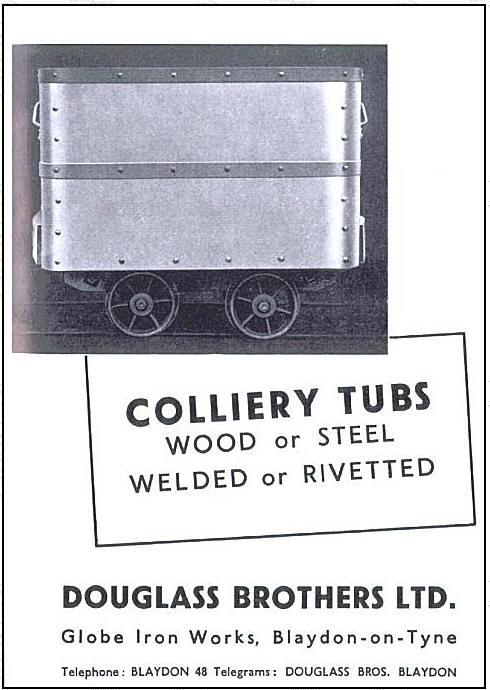
* Douglass Brothers (Globe
Iron Works): Records mention William Douglass, James
Douglass, and Nicholas Douglass of Blaydon, who were iron
merchants and operated the Globe Iron Works in Blaydon. They
leased the land for the works around 1864, which they had
recently built. The company was later referred to as
Douglass Brothers Limited.
* Family Connection to Blaydon
and Winlaton: It is suggested that this Douglas family
branch was from an old Scottish border family that had been
settled in Northumberland since the 13th century and
connected with Blaydon and Winlaton since the latter part of
the 17th century, based on records in Ryton church.
*
Notable Members:
* Mr. Nicholas Douglass was reportedly
born in Blaydon and served his engineering apprenticeship in
Newcastle-on-Tyne. He was also associated with an
engineering and shipbuilding firm on the Thames.
*
Another individual, William Douglass, is mentioned as a
Lighthouse engineer, possibly related to this line.
*
Business Details: The records relate to leases, mortgages,
and agreements concerning the Globe Iron Works and land in
Blaydon, dating through the late 19th century (e.g., 1864,
1872, 1883, 1887).
The Douglass family of Blaydon was a prominent local family rooted in the industrial economy of the late 19th and early 20th centuries, with established ties to the North East of England dating back centuries.
Family Members and Generations
The records primarily identify three generations of the family:
The Founding Industrialists
The initial generation of the Douglass Brothers who established and ran the
Globe Iron Works were:
* William Douglass (Iron Merchant, Blaydon)
* James Douglass (Iron Merchant, Blaydon)
* Nicholas Douglass (Iron Merchant, Blaydon)
These men were the principals who built the works (c. 1864) and executed major transactions in the 1870s, including mortgages and large industrial land leases.
The Second Generation/Successors
By the mid-1880s, ownership of the business and associated assets was being passed to the next generation, showing their professional positions in related local industries:
* William James Douglass (Iron Founder, Blaydon): This suggests he took over the primary manufacturing role at the Globe Iron Works.
* Thomas Douglass (Manager, Winlaton Nut and Bolt Company Limited, Winlaton):
This shows the family's influence extended to the nearby town of Winlaton and into ancillary trades, reflecting the regional inter-connectedness of industrial families.
* William Bowman Douglass (Cashier, Winlaton): Also based in Winlaton, holding a significant financial role in the nut and bolt company.
The 20th Century Trustees
By 1934, the family's long-term assets were being managed through a family trust, indicating considerable inherited wealth and standing:
* Annie Douglass (Widow, Newcastle): Listed as a Douglass trustee, suggesting she was the widow of one of the earlier principals. Her residence in
Newcastle upon Tyne shows the family's transition to living in the urban centre as opposed to the industrial area of Blaydon.
* John Harold Youll (Newcastle): Also listed as a Douglass trustee. The "Youll" name links back to John Gibson Youll, who acted as a trustee for the family in 1872, suggesting a long-standing, multi-generational legal or business relationship.
* Ann Douglass: Appointed as a trustee in 1934, alongside the Rogerson family, indicating a continued role in managing family assets.
Broader Family Context
Based on general records for this family branch (though outside the specific provided data points):
* The family was said to have been settled in Northumberland since the 13th century and connected with Blaydon and Winlaton since the late 17th century.
* Nicholas Douglass was noted to have been born in Blaydon and had served an apprenticeship in Newcastle, later being associated with an engineering and shipbuilding firm on the Thames, demonstrating his professional mobility beyond the North East.
In summary, the Douglas (or
Douglass) family in Blaydon appear to have had a significant local
presence, deeply involved in the region's industrial
heritage, particularly through their ownership and operation
of the Globe Iron Works in the 19th century.
 |
|
 |
|
 |
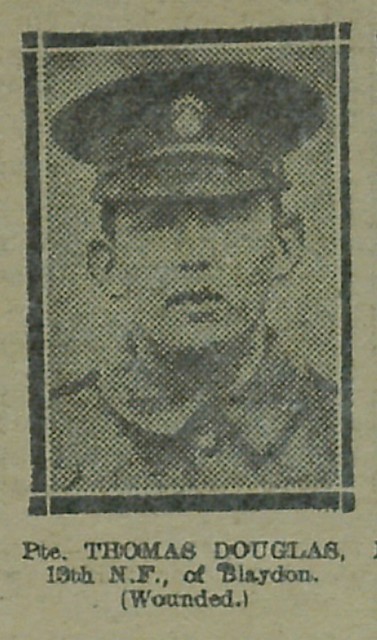
Thomas Douglas
Northumberland Fusiliers |
|
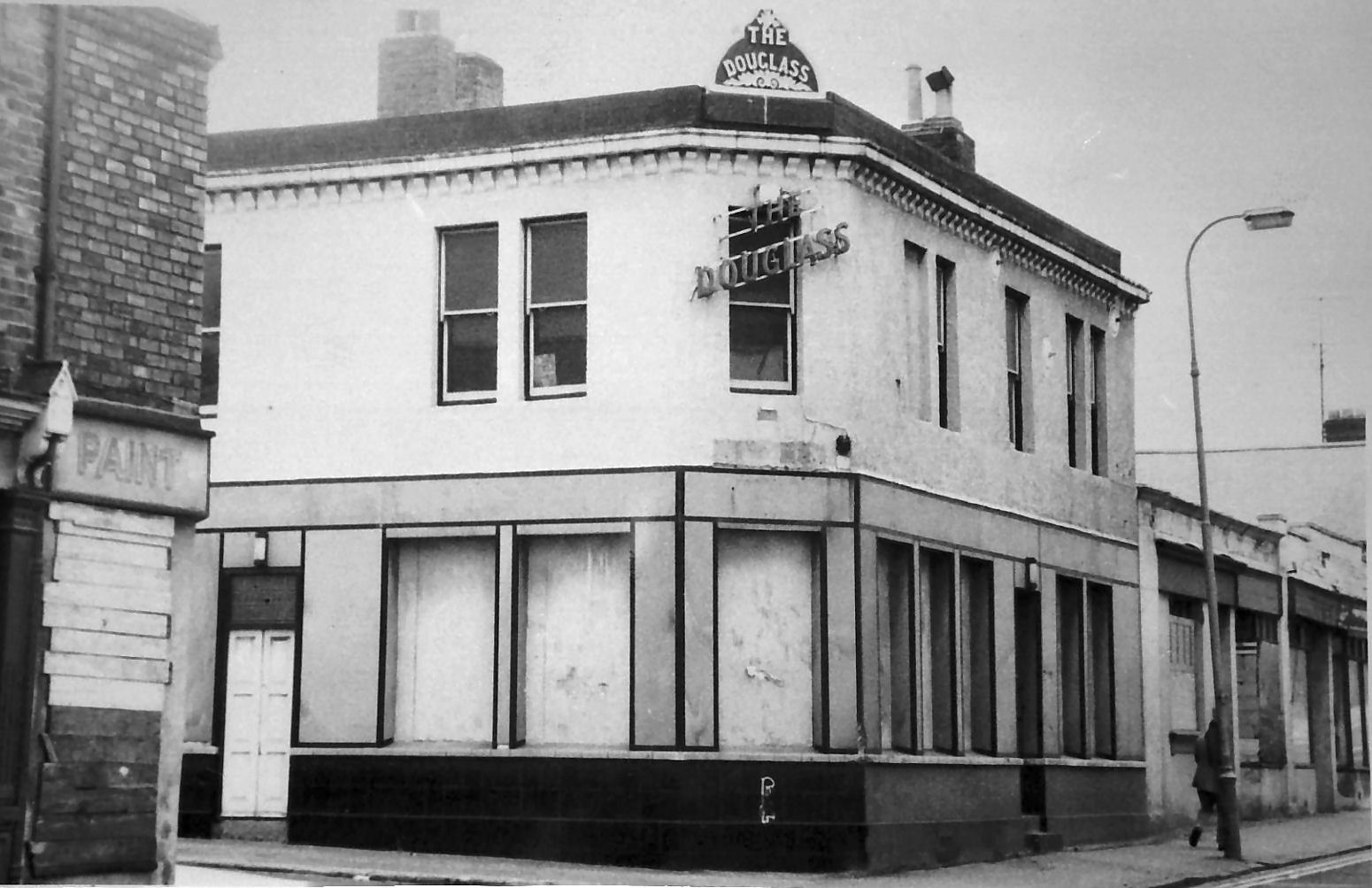
A part of the original Blaydon was the Horsecrofts, of which
Fountain Lane was the eastern boundary, and as we have seen this
was very extensive. There was once a public house there, known
as the 'Douglas' and being so centrally placed was a favourite
haunt of the men of Blaydon. The licence was transferred to the
inn of the same name on Tyne Street, which has now closed its
doors for the last time, and is now demolished. |
|
1954 advertisement |
See also: Douglass Brothers
Joseph Douglass, 1896-1918, telegraphist
Douglass Brothers of Globe Iron Works
Ryton marriages
William Douglass, Lighthouse engineer
Mr. Nicholas Douglass, was
associated was
associated with an engineering and shipbuilding firm on the Thames. The
Douglasses came, however, from an old Scottish border family which had
been settled in Northumberland since the thirteenth century, and has
been connected with Blaydon and Winlaton since the latter part of the
seventeenth century, as shown by records in Ryton church. It was in
Blaydon that Mr. Nicholas Douglass was born, and in Newcastle-on-Tyne
that he served his engineering apprenticeship with a Mr. Burnett.
|