|
| |
How the Douglasses came to Walton County
|
|
Awaiting additional images
|
This page is a stub.
You can help improve it.
Walton County, perched on Florida's Emerald Coast with its southern edge
touching the Gulf of Mexico, had a population of 75,305 as per the 2020
census. DeFuniak Springs serves as its county seat, and Britton Hill, at
345 feet, is Florida's highest natural point. The county is part of the
Crestview–Fort Walton Beach–Destin Metropolitan Statistical Area.
European Americans established Walton County in 1824, naming it
after Colonel George Walton Jr., secretary of the Florida Territory from
1821 to 1826 and son of George Walton, a signer of the Declaration of
Independence.
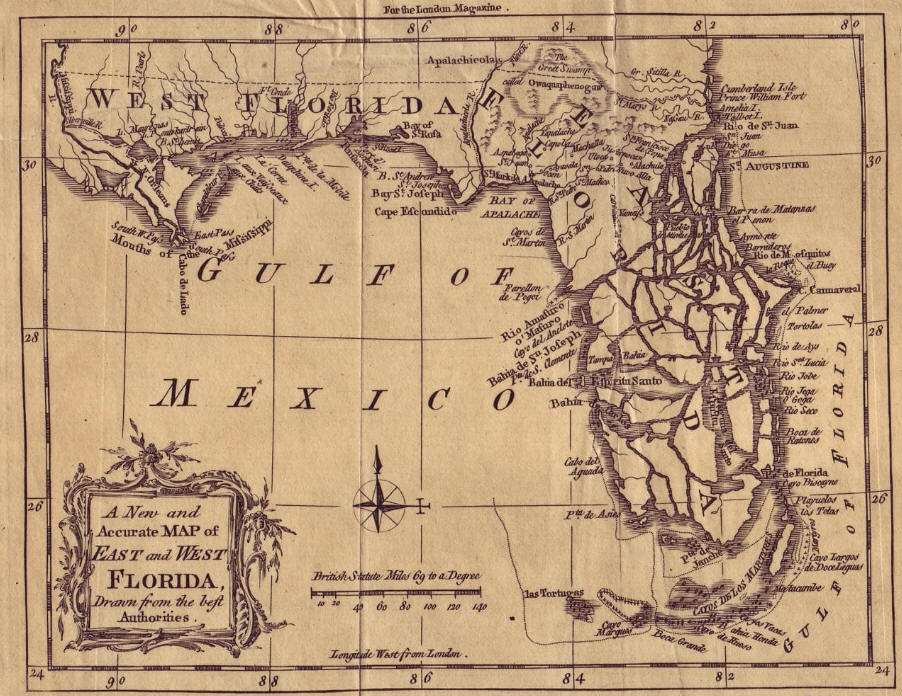
From 1763 to 1783, the area now known as Walton
County was part of British West Florida. During this period, British
settlers, including Gaelic-speaking Scottish families like the McKinnons,
Douglasses, MacIvers, Campbells, MacRaes, and McLeans, migrated. In
1826, these families made the arduous journey from the Carolinas to Florida in a caravan of
wagons. They settled in Walton County's beautiful Euchee Valley, Knox
Hill, Euchee Anna on Bruce Creek, and Mossey Bend.
The Scottish
settlers from the Carolinas settled in Defuniak Springs, while English
settlers, mainly farmers and fishermen, populated the coastal areas such
as Santa Rosa Beach, Sandestin, Miramar Beach, and others. Both the
Scots and English settlers were self-sufficient, relying on subsistence
agriculture and minimal external trade. Their only external trade was
between the Scots in Defuniak Springs and the English farmers and
fishermen along the coast.
The initial settlements were in the
Euchee Valley, near the Choctawhatchee River landing maintained by Sam
Story, a mixed-race(1) Yuchi. They also founded one of the first
Presbyterian churches in Northwest Florida, which remains active today.
When Spain regained control of Florida in 1783, many British
settlers in Pensacola left, but those in Walton County stayed. The
Spanish found these settlers ungovernable, as they refused to convert to
Catholicism or pay taxes. As American settlers moved into North Florida,
the Walton County settlers gradually integrated into the new population,
forming the region's majority.
Douglas Archives genealogy
research shows that the families intermarried with future generations
being able to trace their families back to the original settlers.
Notes:
1. Sam Story, also named Timpoochee Kinnard, was Chief of the Walton County, Florida, band of Euchee (Yuchi)
Indians in the early 19th century, who occupied the lands on and to the
west of the Choctawhatchee River. His parents were Timothy Kinnard, a white man of Scottish descent, and an unknown Yuchi woman. The chief was a well-known figure in the Florida Panhandle and was highly respected by whites, who migrated to the area in ever-increasing numbers following the acquisition of Florida by the United States from Spain in 1821.
2. Douglas at Douglas Ferry was a little hamlet with four stores and may
have had a dozen houses that no longer exist. It was named for
Alexander Douglass, born ca 1794-5 in Richmond Co., North Carolina. On 1/3/1822, bought land next to Murdock MacKinnon, Sarah Douglass and Daniel McSwain. Migrated with his mother Sarah Curry Douglass and brother Daniel B. Douglass (and possibly sister Mary Douglass) to Florida about 1826; stayed on the Chipola River in Gadsden Co., Georgia for 2 years and farmed. He was appointed and served in the 1825 Georgia Legislative Council of the Territory representing Gadsden Co.,
Georgia. He later tried to join others in Walton Co., Florida; he was held back by a rise of the waters. He surveyed the river and the land and made the first crossing at the spot referred to as Douglass Ferry, which was named for him.
3. March 12, 1764 Memorial to the (British) Board of Trade from Lieutenant Colonel H. Douglas seeking approval for his proposals
“for becoming Proprietor of an entire Township of Lands in the Colony of West
Florida”; written from London (British Colonial Office West Florida Records).
He also requested “An Entire Township in
the Island of St. John for himself & Friends”. It appears that Colonel H.
Douglas (20,000 acres requested) and Colonel Stewart Douglas (10,000
acres), possibly brothers, were granted land in East Florida.
Further research required.
4. British West Florida. In the Seven Years' War (1754, 1756-1763), British forces soundly defeated those of the Spanish and the French. One result was a new British province, West Florida, fashioned in 1763 from what had been enemy possessions in what are now Mississippi, Louisiana, Alabama, and the Florida panhandle. Territorially, British West Florida included more than half of the present state of Alabama.
See also:
•
Catharine
Douglass MacKinnon and the Seminole War
•
The Daniel Douglas and Campbell Families
[PDF]
• The Journey South: William Douglas and
the Great Colonial Migration
Contributions
Do you have an ancestor whose
story should be told here? Please let us have the details.
|
Source
Sources for this article include:
Robin F. A. Fabel (1988). The Economy of British West Florida, 1763–1783
Cecil Johnson (1971). British West Florida, 1763–1783.
John Love MacKinnon; The History of Walton County
Any contributions will be
gratefully accepted
|
|