This page is a stub.
You can help improve it.
It is not conceivable, says Mr Thompson, from whom I have procured some
information on this obscure subject, that this claim of the Earl of
Douglas could have any other basis than a revival of the right of the
Baliol family, whose titles appear to have devolved at this period on
Earl of Douglas. John Baliol, it is well known, left a son, Edward, whom
we have seen crowned King of Scotland in 1332, who afterwards died in
obscurity, and without children. (History, vol ii, pp.16,90). The right
of the Baliol family upon this reverted to the descendants of Alexander
de Baliol of Kavers, brother of King John Baliol;(1)
and we find that, in the reign of David the Second, the representative
of this Alexander de Baliol was Isabel de Baliol Comitissta de Mar, who
married Donald twelve Earl of Mar. This lady, it appears, by a deed in
the Rotuli Scotiae, vol i, p. 708, married secondly, William de
Careswell, who during the minority of our son, Thomas, thirteenth Earl
of Mar. Lord of Garryach and Cavers, obtained from Edward the third "the
custody of all the lands which belonged to Isabella, the late Countess
of Mar. his consort." Thomas Earl of Mar died without issue, but he left
the sister, Margaret, who succeeded her brother, and became Countess
with Mar in her own right. She married for her first husband, William
Earl of Douglas, whom her right, became Earl of Mar; and as possessing
through her the right of the House of Baliol, upon this ground laid
claim to the crown. Winton, vol ii. p. 304 does not mention the ground
upon which the Earl of Douglas disputed the throne with Robert the
Second. But the ancient manuscript entitled 2Extractc ex Chronicic
Scotiae, fol.225, is more explicit. Its words are "Dowglace Willmus
Comes manu valida militari, coram cis comparuit allegans jus corone et
successionis in regnum ad se parte Cuminensium er Ballorum pertinere.".
And this is corroborated by Bower, Fordun a Goddal, vol ii. p. 382.
Douglas's right through his wife, we have just explained; and I may
refer to a paper on the ancient lordship of Galloway, in the ninth
volume of the Archaeolohia, p. 49, by Mr Riddell, for an explanation of
his title through Comyns.
(1) Dugdale's
Baronage, vol. i. p. 525
The Douglas Claim to the Scottish Crown: A Baliol Legacy Revisited - An
interpretation
According to Mr. Thompson, whose insights illuminate this otherwise obscure episode, the Earl of Douglas’s claim to the Scottish throne appears rooted in a revival of the Baliol family's dynastic rights. These titles, long dormant, seem to have devolved upon the Douglas line during the mid-14th century.
John Baliol, once King of Scotland, left a son—Edward Baliol—who briefly reclaimed the crown in 1332 before dying childless and in obscurity. With Edward’s death, the Baliol claim reverted to the descendants of Alexander de Baliol of Cavers, John’s brother. During the reign of David II, the representative of this line was Isabel de Baliol, Countess of Mar, who married Donald, the twelfth Earl of Mar.
Isabel later wed William de Careswell, and during the minority of her son Thomas, the thirteenth Earl of Mar and Lord of Garryach and Cavers, Edward III granted Careswell custody of all lands formerly held by Isabel, as recorded in the *Rotuli Scotiae* (vol. i, p. 708).
Thomas died without issue, and his sister Margaret succeeded him, becoming Countess of Mar in her own right. Her marriage to William, Earl of Douglas, transferred the Baliol inheritance into the Douglas family. Through Margaret, William Douglas acquired the title of Earl of Mar and, crucially, a legitimate claim to the Scottish crown.
While Wyntoun (vol. ii, p. 304) omits the basis of Douglas’s challenge to King Robert II, a manuscript titled *Extracte ex Chronicis Scotiae* (fol. 225) offers a clearer account. It states:
"Dowglace Willmus Comes manu valida militari, coram cis comparuit allegans jus corone et successionis in regnum ad se parte Cuminensium et Ballorum pertinere."
This assertion is corroborated by Bower’s continuation of Fordun (Scotichronicon, vol. ii, p. 382), affirming Douglas’s claim through both the Baliol and Comyn lines.
For further context on Douglas’s title via the Comyns, Mr. Riddell’s
paper on the ancient lordship of Galloway (Archaeologia, vol. ix, p. 49) provides valuable insight into the tangled web of noble succession and territorial rights that underpinned this royal contention.
See also:
•
Douglas,
King of Scotland
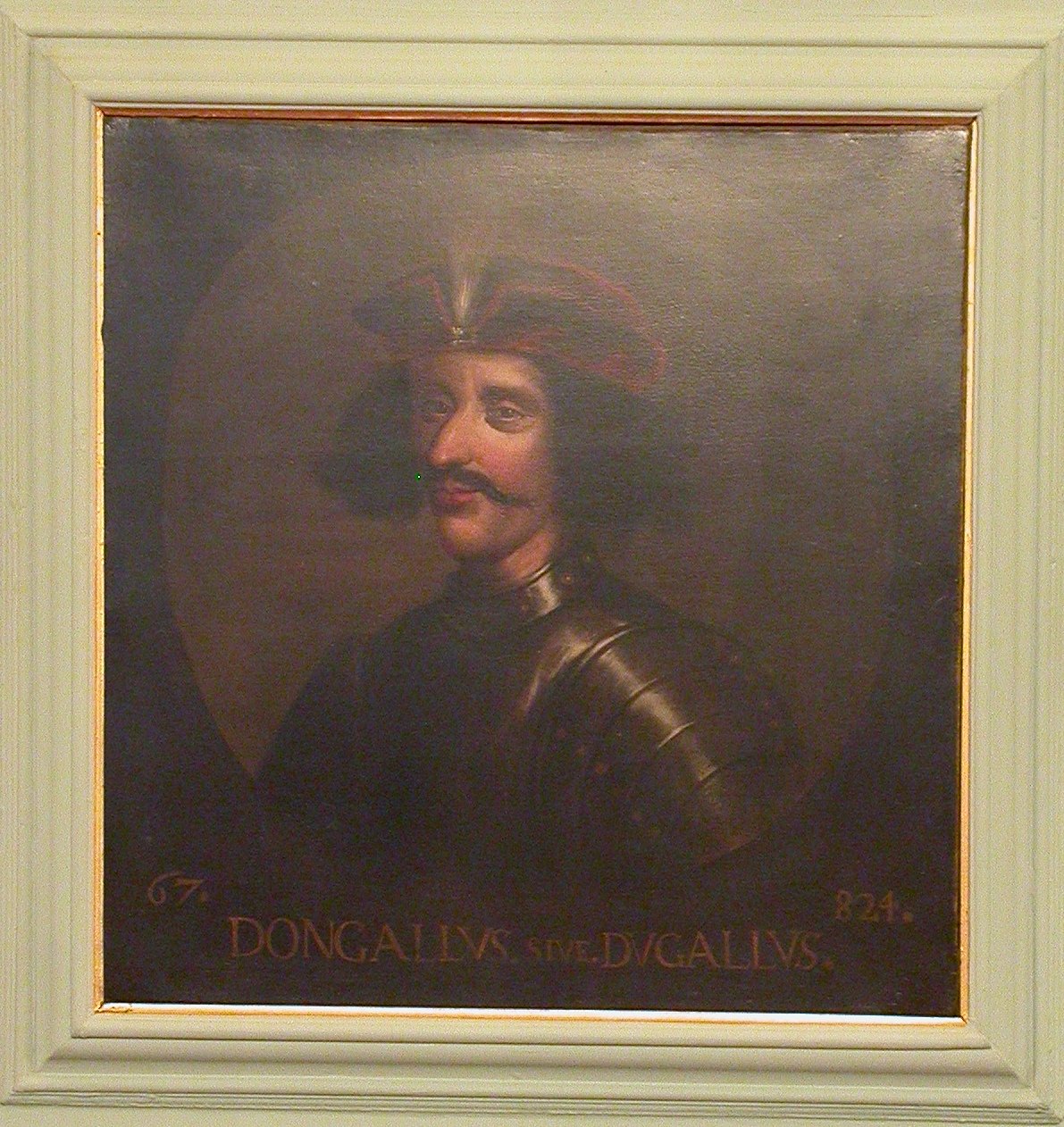
(833-8),The 67th King
•
Did a Douglas actually claim the crown?
• Douglas of Cavers
• William,
1st Earl of Douglas
Contributions
Do you have an ancestor whose
story should be told here? Please let us have the details.
|