|
| |
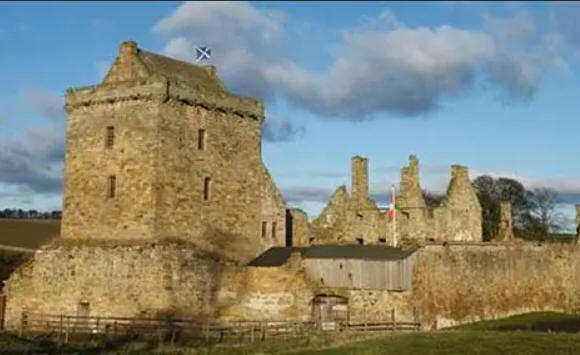
Balgonie Castle
|
|
|
This page is a stub.
You can help improve it.
Balgonie was not a Douglas castle, but
there are strong links.
Douglas Connections with Balgonie Castle
1. The Douglas link comes through the Lundie/Lundin family
Balgonie Castle was originally associated with the Sibbald/Sibbauld family and later passed to the Lundie (Lundin) family through marriage.
According to the history of the barony:
- “The castle and Barony came into the possession of the Lundie family through marriage. Sir Robert Lundy of Balgonie
was the second son of John Lundy of that ilk.”
The Douglas connection arises because the Lundies intermarried with the Douglases in the later medieval period. Several cadet branches of the Douglases — particularly those in Fife and Angus — had marital ties with the Lundin/Lundie family, who held Balgonie for generations.
2. The castle later passed to families connected to the Douglases.
After the Lundies, Balgonie was held by the Leslies, Maxwells, and Balfours.
The Maxwell and Balfour families both had repeated marital links with Douglas lines, especially:
- the Douglases of Lochleven,
- the Douglases of Whittingehame,
- and the Douglases of Kilhead/Kelhead.
While these connections do not make Balgonie a “Douglas castle,” they place it firmly within the network of estates tied by marriage to Douglas kin.
3. No evidence of direct Douglas ownership
None of the major Douglas lines — Douglas of Douglas, Angus, Morton, Drumlanrig, or Queensberry — appear as proprietors of Balgonie.
The castle’s principal historical owners were:
- Sibbald/Sibbauld family (original builders)
- Lundie/Lundin family
- Leslie family
- Maxwell family
- Balfour family
- Morris family (modern owners)
4. A Douglas presence in the region
Although not owners, the Douglases were active in Fife, and several branches held lands nearby. The proximity of Douglas estates and the intermarriage with the Lundies means that Balgonie sits within the wider Douglas sphere of influence.
Summary:
Balgonie Castle has a Douglas connection, but not through ownership.
The link comes through marriage between the Douglas and Lundie families, and later through marital ties with the Maxwell and Balfour families, both of whom held the castle. It is therefore part of the broader Douglas story, even if it was never a Douglas stronghold.
Contributions
Do you have an ancestor whose
story should be told here? Can you add to this article? Please let us have the details.
|
Source
Sources for this article include:
Coventry, Martin (2013). The castles of Scotland
Any contributions will be
gratefully accepted
|
|