This page is a stub.
You can help improve it.
1. Overview of Tully House
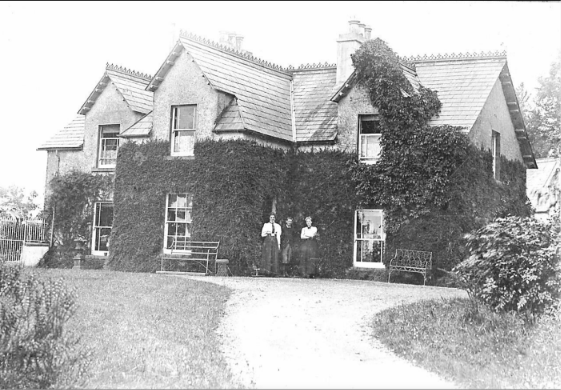
Tully House, as recorded by William Magee Douglas, reflects the disciplined upbringing in the Douglas family, emphasizing strict rules and corporal punishment for disobedience and untruthfulness. The house served as a family gathering place, particularly during summers, where children helped with farm activities under supervision. After the deaths of the grandparents, the house experienced periods of emptiness until it was taken over by Uncle Charlie, a beloved doctor who eventually sold the property after the Irish Troubles, marking the end of an era for the family.
2. Family Dynamics and Values
The household was characterized by a blend of strict discipline and spiritual guidance. Letters from William's mother expressed deep concern for his well-being, highlighting the family's emphasis on kindness and moral integrity. William's father stressed the importance of family unity and faith, even in challenging times. This strong familial bond and adherence to truthfulness shaped William's character, allowing him to recount stories with remarkable consistency.
The Douglas family in Tully, Killeshandra (County Cavan,
Ireland) was established by descendants of the Rev. William Douglas. By
the early 20th century, members like the prominent local physician Dr.
Charles James Douglas resided at Tully House, a historic property
connected to the local area's medical and land history.
•
Family Background and Timeline
Rev. William
Douglas (1771–1860): A Methodist minister with roots near Lurgan who
married Mary Atkin. (Possibly som of Moses Douglas, of Kinnigo, Co Armargh.)
William Douglas (1811–1903): Son of Rev. William, he married Eliza
Magee (born 1820 in Killeshandra) and later settled in the area. Both
are buried at the Cathedral of Kilmore. Thier son, William Magee
Douglas, 1854 - 1940, a Methodist minister / missionary from Ireland and they settled in South Africa. Rev Douglas was the grandson of Rev William Douglas, an early Methodist Minister in Ireland.
Dr. Charles James Douglas
(1856–1943): Their son, who operated a private practice from Tully
House, served as a British Army doctor in South Africa, and famously
treated an injured IRA member during the Irish revolutionary period.
3. Historical Significance
The document mentions "The Gate Lodge," part of Ireland's historical preservation, which dates back to before 1835. This structure, built for Major Randall Stafford, is noted for its architectural features, including a steel roof and decorative eaves, underscoring the historical importance of Tully House within the region.
4. Visual Documentation
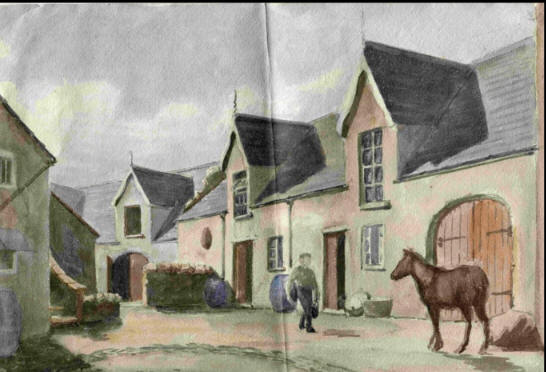
The PDF includes various images and artistic representations of Tully House, showcasing its evolution over time. Notable visuals include early sketches, paintings, and photographs of family members, providing a glimpse into the life and legacy associated with the estate.
5. Modern Context
By 1880, William Henry Douglas was residing in Killeshandra, Co. Cavan, during a period when reform movements aimed to improve the lives of tenant farmers were gaining traction. This context highlights the socio-economic backdrop against which the family's history unfolds.
Contributions
Do you have an ancestor whose
story should be told here? Please let us have the details.
|