The Declaration of Arbroath

Click here to 
Print this page

document  


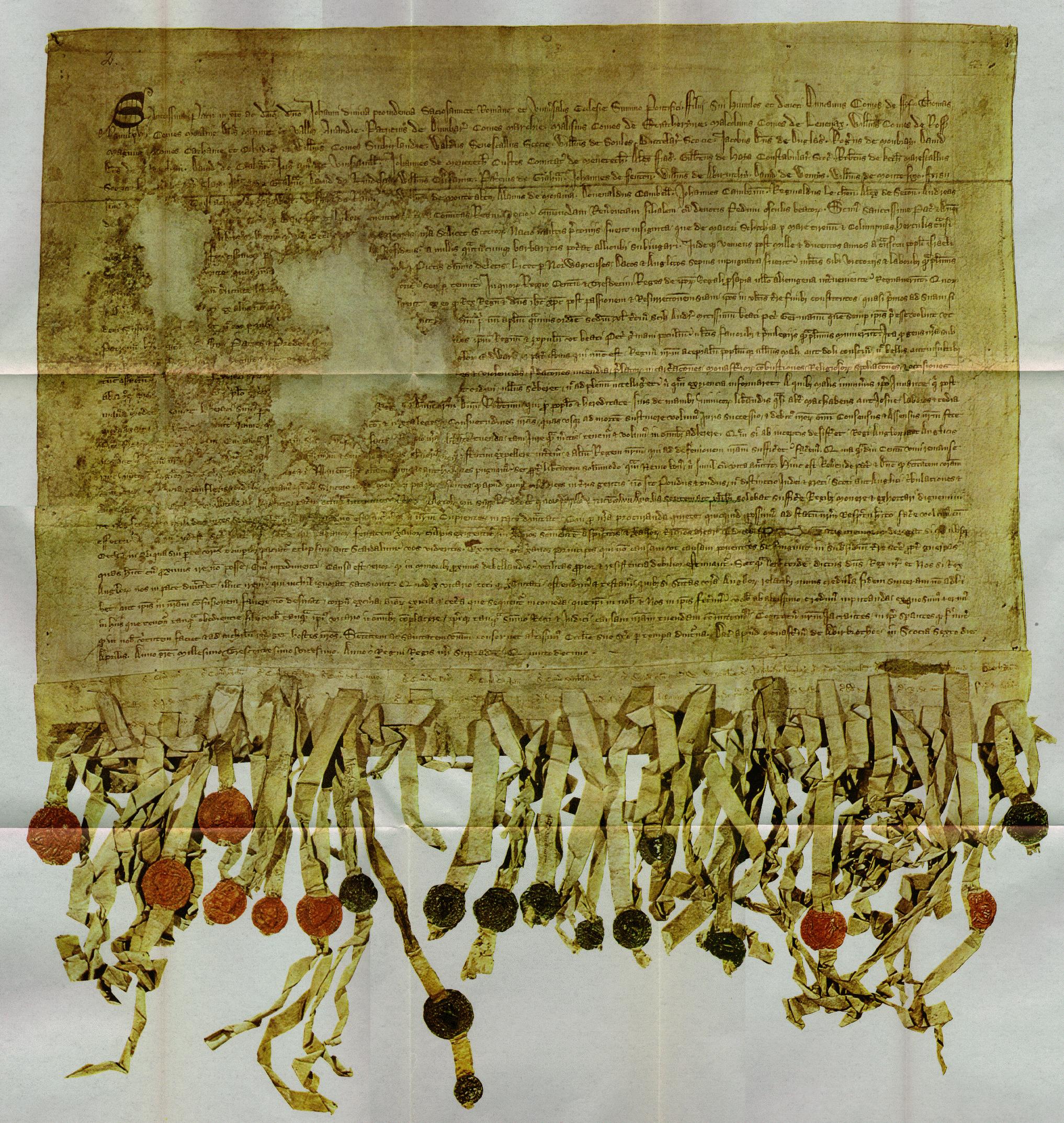
The Declaration of Arbroath was a 1320 letter from Scottish nobles to Pope John XXII, asserting Scotland’s independence and defending King Robert the Bruce’s right to rule. It’s one of Scotland’s most iconic historical documents.

Historical Context
- The declaration was written during the First War of Scottish Independence, a time when Scotland was resisting English attempts to dominate the kingdom.
- King Robert I (Robert the Bruce) had been excommunicated for defying papal calls for peace with England. The declaration was part of a diplomatic effort to lift that excommunication and gain papal recognition of Scotland’s sovereignty.

Content and Message
- Dated 6 April 1320 and sent from Arbroath Abbey, the letter was signed by 51 Scottish barons and nobles.
- It opens with a history of the Scottish people, claiming descent from ancient Scythians and emphasizing their long-standing independence.
- The most famous passage declares: “It is in truth not for glory, nor riches, nor honours that we are fighting, but for freedom alone, which no honest man gives up but with life itself.”
- The letter insists that Robert the Bruce is king by the will of the people, and that if he were to betray Scotland’s cause, they would replace him — a radical assertion of popular sovereignty for its time.

Purpose and Impact
- The declaration aimed to persuade the pope to recognize Scotland’s independence and pressure England to cease hostilities.
- Though the pope did not immediately respond favourably, the document helped solidify Bruce’s legitimacy and became a symbol of Scottish unity and resistance.

Interpretation
The Declaration of Arbroath, ostensibly a letter from the barons of Scotland - likely heavily influenced by the Bruce royal administration - to Pope John XXII in 1320. The much-celebrated clause in which the barons apparently claimed a willingness to replace King Robert if he were 'to make us or our kingdom subject to the King of England or the English' is probably best understood as a retroactive justification of Bruce's usurpation of the Balliol claim in 1306.

Legacy
- The Declaration of Arbroath is considered a precursor to modern constitutional thought, influencing later documents like the American Declaration of Independence.
- It was awarded UNESCO Memory of the World status in 2016 for its global significance.
- Today, it remains a touchstone of Scottish identity, celebrated annually on or around 6 April.

Read more:
For a more detailed review of the Declaration and its significance, read Sally Douglas's paper>>>


Contributions:
Do you have an ancestor whose story should be told here?  Can you add to this article? Please let us have the details.


Source


Sources for this article include:
  • xxx


  • Any contributions will be gratefully accepted


    Back to top


    The content of this website is a collection of materials gathered from a variety of sources, some of it unedited.

    The webmaster does not intend to claim authorship, but gives credit to the originators for their work.

    As work progresses, some of the content may be re-written and presented in a unique format, to which we would then be able to claim ownership.

    Discussion and contributions from those more knowledgeable is welcome.

    Contact Us

    Last modified: Sunday, 08 March 2026