The Barony of Bothwell: A Scottish Lordship Through the Ages
Origins and Early Grants
The Barony of Bothwell was one of Scotland’s most significant medieval lordships, its centrepiece being the mighty
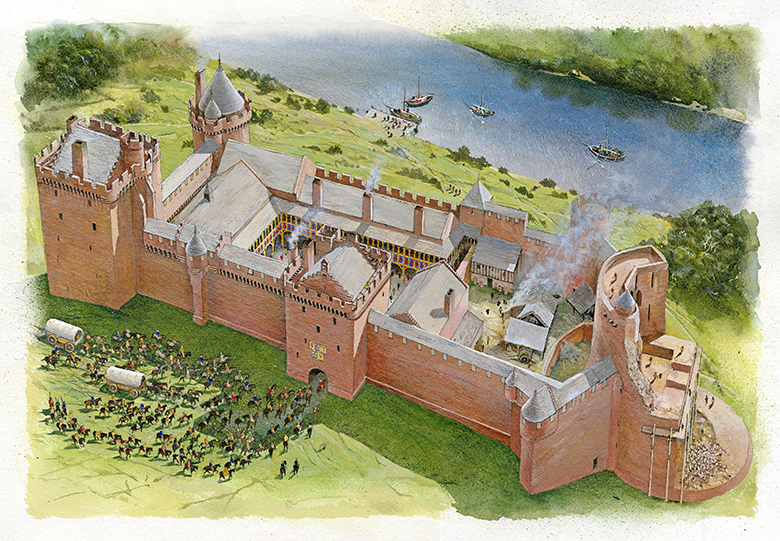
Bothwell Castle on the banks of the River Clyde. The barony was created before 1159, though whether by King David I (1124–53) or King Malcolm IV (1153–65) remains uncertain. A surviving charter of Malcolm IV records the grant of lands between the two Calders to David Olifard (or Olifant/Oliphant), Justiciar of Lothian, in exchange for hereditary estates at Sawtry in Huntingdonshire. David is also said to have received lands in Roxburghshire from David I.
By the reign of Alexander II (1214–49), Walter Olifard, Justiciar of Lothian, held the barony until his death in 1242. Through marriage to an Olifard heiress, the lands passed into the hands of the Moray family. Walter de Moravia (Walter of Moray), son of William de Moravia and grandson of Freskin, inherited the barony by the mid-13th century. Around 1252, Walter began construction of Bothwell Castle, a vast red sandstone fortress intended to demonstrate the family’s power. His death soon afterwards left the project incomplete, though his son William Moray continued to hold the lands and served as pantler of Scotland by 1284.
Bothwell Castle and the Wars of Independence
The outbreak of the Wars of Scottish Independence transformed Bothwell Castle into a focal point of conflict. In July 1296, William Moray surrendered to King Edward I at Montrose, forfeiting Bothwell to the English Crown. Edward granted the castle and barony, valued at £1,000 per annum, to Aymer de Valence, Earl of Pembroke.
The fortress was besieged and captured by English forces in 1296 and again in 1301. Edward’s charter of August 1301 records his grant of Bothwell to Valence, even as the rightful heir, the young Andrew Murray, remained in Scotland. The castle changed hands multiple times during the wars, reflecting its immense strategic importance. Its repeated captures and recaptures symbolised the wider struggle for Scotland’s independence.
Later Ownership and the Douglases
In the aftermath of the wars, Bothwell passed into the possession of the powerful Black Douglas family. For nearly a century, the Douglases held the barony, cementing its role as a centre of noble authority. However, with the downfall of the Black Douglases in 1455, the lands reverted to the Crown.
King James II and later James IV redistributed the forfeited estates. Patrick Hepburn was granted the barony and created the first Earl of Bothwell. Yet at the king’s request, Hepburn shifted his seat to Hermitage Castle in Liddesdale, while the Red Douglases assumed control of Bothwell.
The Earls of Bothwell
The title of Earl of Bothwell became one of Scotland’s most prominent peerages. Among its holders, James Hepburn, the fourth Earl, is the most renowned. He was the third husband of Mary, Queen of Scots, and a central figure in the turbulent politics of the 16th century. Despite his fame, Hepburn himself had no direct connection to Bothwell Castle, which by then lay in Douglas hands.
Legacy
The Barony of Bothwell illustrates the shifting fortunes of medieval Scotland’s nobility. From its Olifard origins and Moray inheritance, through the wars with England, to the rise and fall of the Douglases and the creation of the Earldom, Bothwell’s story is one of power, conflict, and dynastic change. Bothwell
Castle, though never completed to its original design, remains a
monumental reminder of the barony’s historic significance and Scotland’s
enduring struggle for sovereignty.
Contributions
Do you have an ancestor whose
story should be told here? Can you add to this article? Please let us have the details.
|