In the summer of 1333, the fortunes of Scotland stood on a knife-edge. The long war that had raised the name of Douglas to renown — from the forest raids of 1307 to the victories at
Byland and
Stanhope — had entered a darker chapter.
Sir James Douglas had fallen in Spain three years before, and with him passed the generation that had learned its craft under King Robert. What remained was the weight of their example, and the expectation that the younger branches of the house would hold the line in their stead.
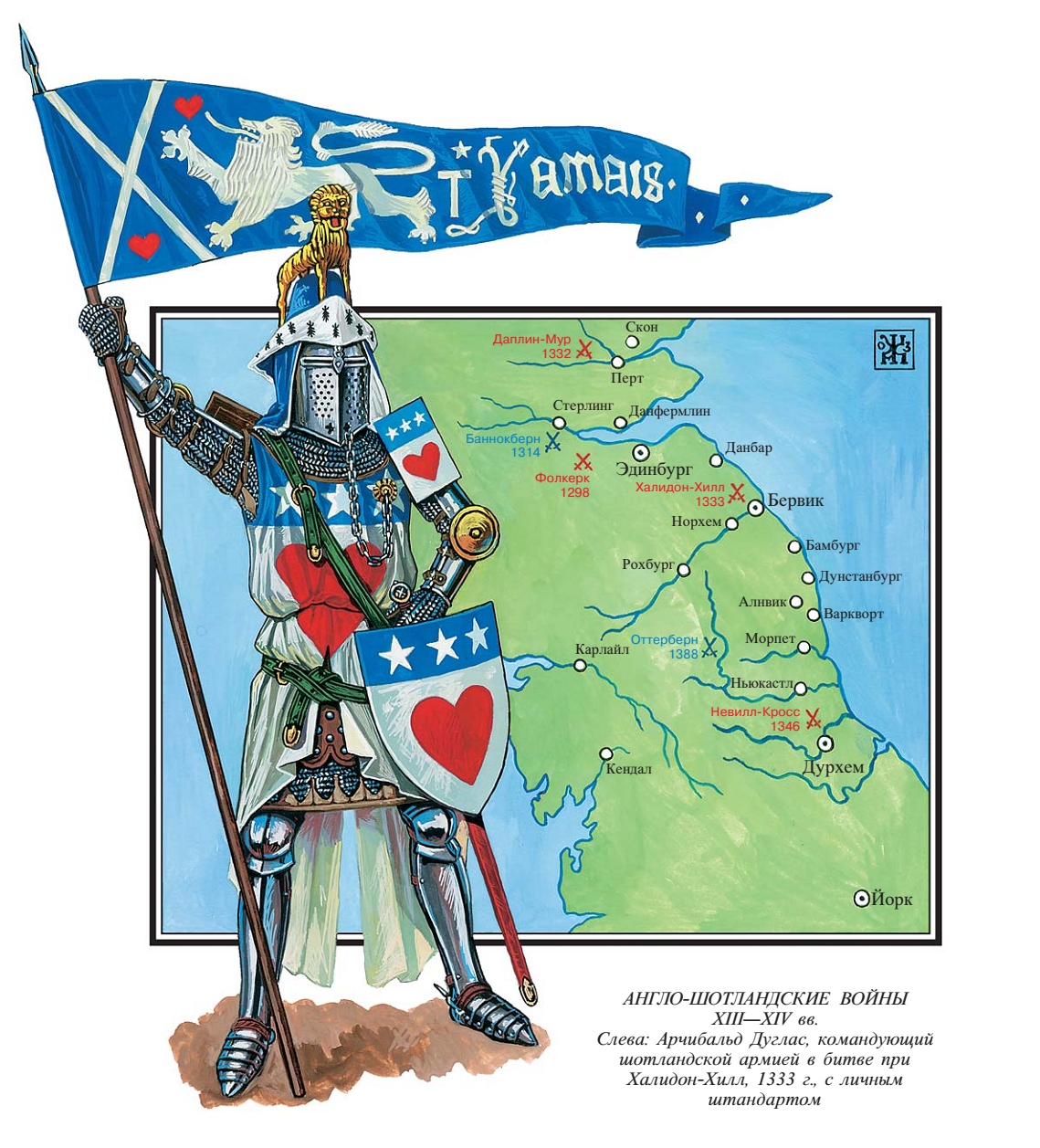
When Edward III marched north to relieve the English garrison at Berwick, the guardianship of Scotland lay with
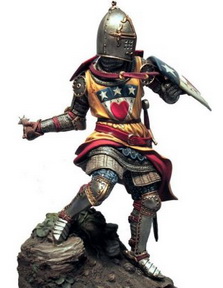
Archibald Douglas, the Regent — brother to the Good Sir James, and a man whose courage was never in doubt, though he bore neither his brother’s battlefield instinct nor his uncanny sense for terrain. Yet the burden of command fell to him, for no other name carried the authority to unite the host.
The English king had chosen his ground with cold precision. Halidon Hill, rising just west of Berwick, offered a long, dry slope for his archers and a killing field of marsh and broken ground below. The Scots, bound by the need to relieve the starving town, had no choice but to advance. It was a field that rewarded patience, discipline, and the longbow — and punished every virtue that had once made the Scots formidable.
The Scottish host formed in the old schiltron order, the same dense spear formations that had held firm at Bannockburn. But the age had shifted. The English archers, massed in wings along the hillside, loosed their shafts in a storm that tore gaps in the advancing ranks before a single spear reached striking distance. The ground underfoot was soft and uneven; the formations lost cohesion; the climb grew steeper; the arrows fell thicker.
From the crest of the hill, Edward’s men watched the Scottish advance falter, then break. The schiltrons, once the emblem of Scottish defiance, dissolved under the weight of wounds they could not answer. When the English men-at-arms finally descended, it was to finish a battle already decided by the bow.
In the midst of this ruin, Archibald Douglas fought with the grim resolve expected of his name. Chroniclers record that he pressed forward long after the day was lost, striving to reach the English line in the hope that a single breach might rally the remnants of the host. He fell in the crush, surrounded by his household knights, many of whom died beside him. With his death, the leadership of the realm was shattered; the guardianship passed into confusion; and the hard-won independence of Scotland entered its bleakest interlude since the days before Bruce.
For the House of Douglas, Halidon Hill marked the end of the first great chapter. The line that had risen from the Selkirk Forest to the high councils of the kingdom was struck down in a single afternoon. Yet the memory of their earlier triumphs — the forest war, the harrying of Galloway, the night assaults across the Border — endured. In the years that followed, younger Douglases would rise again, drawing strength from the legacy of those who had fallen, and from the knowledge that even in defeat, the name had not bent.
Halidon Hill stands in the record not only as a national calamity, but as a moment when the Douglas story turned from ascent to endurance. It is the hinge between the age of the Good Sir James and the later Black Douglases who would dominate the fifteenth century. And in the quiet of the archives, the battle reads less as a failure of arms than as the closing of a generation — the last echo of the men who had fought beside Bruce, and the heavy inheritance left to those who came after.
Contributions
The Douglas Archives are built
from families histories. Do you have an ancestor whose
story should be told here? Please let us have the details.
|